

I needed a social media cleanse after an online argument with a kid convinced everyone between the east coast and the Rockies resents biodiversity and wild places.
It wasn’t true, I said, listing off initiatives to remove dams, restore habitat, protect and restore endangered species, manage invasives, provide outreach and education opportunities, and advocate for our wild places. I argued it’s cognitive bias- states like California and New York have re-engineered entire river systems to the detriment of biodiversity, and get a pass. Sure there are people in the south and Midwest that don’t appreciate biodiversity, I said. There’s people who feel the same way in California and Oregon, in Pennsylvania and Miami.
There’s economic issues, I said. Industry happily exploits rural workers, framing the argument as a zero-sum game- either you have forests and healthy streams, or you have jobs and economic stability. Rural residents don’t necessarily want a mine or factory or CAFO, but when unemployment is persistently ten, twenty percent or more…how do you say no?
None of this mattered. The Screen said so, and their mind wasn’t about to be changed.
I’m as guilty of that mindset as anyone. I’ve put off this stream because it’s in one of the poorest counties in the state, with a legacy of stripping the landscape for timber and metals. In the 90s after the farm crisis CAFOs moved in, tucked away in the hills where no one would see – only smell – them. But it’s been a rainy summer and this was the only corner of the state spared, making it the only viable option for a long weekend camping trip. So I looked at a map and plotted out some public lands, packed, loaded the dog, and went.
I’ve worked in this part of the world before and parts of it have a distinctly The Hills Have Eyes vibe. This wasn’t that, breaking out of the woods into neat, managed hayfields fronting tall, gray bluffs delineating the creek’s course. Tidy riverfront cabins and homesteads with enough funky yard art to make one think this little enclave was a bit more hip than the rest of the region. Healthy looking cows and goats fenced from the creeks to keep them running clear, fat from the grass and browse..
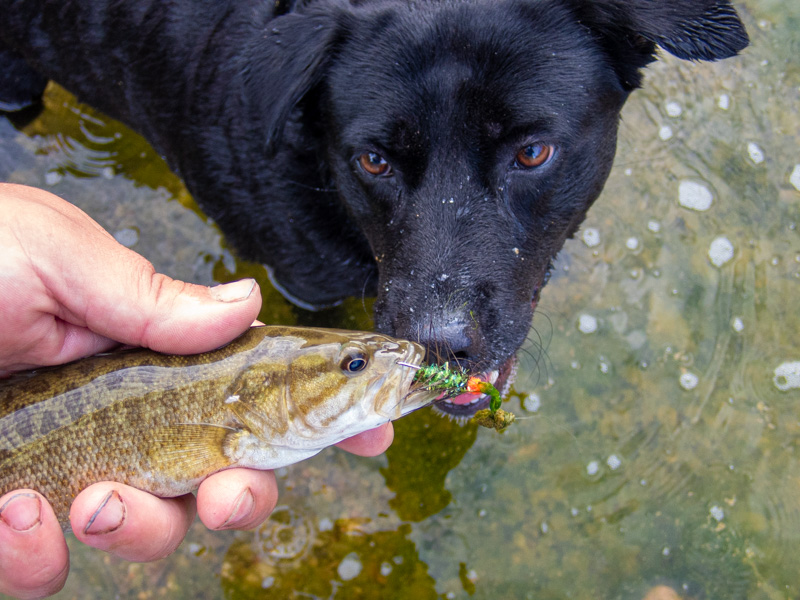
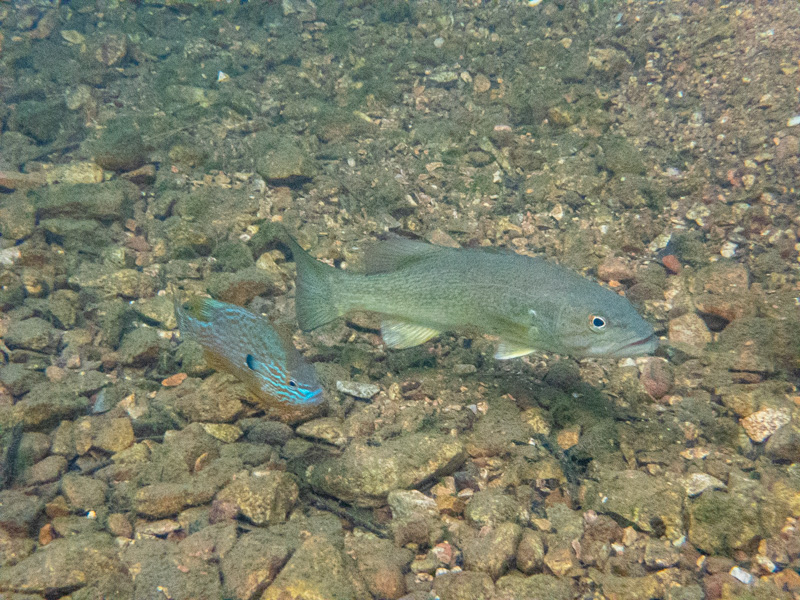
I found an obscure parking lot and a short trail to the creek, up only an inch or two from recent rains, and clear enough to plainly see dark-bodied fish darting around the bottom of gravelly runs. I fished a bit, caught a couple smallmouth, a couple rock bass, and a longear sunfish…but it was mostly about hanging out with the dog, throwing sticks and rocks, doing some snorkeling and enjoying a lovely late afternoon.
Toward sunset a dad and son rounded the corner, fishing their way downstream as I sat with the dog in a shallow run. They had caught a few, and the conversation drifted into Dad’s concerns about the lack of rain, and how it only comes in fits and spurts now- they might get two inches overnight and not see a drop for a month or two. Dad thinks the fishing’s poorer now than when he was a kid- fewer big ones, and he wishes the state would put in some restrictive regulations.
The world isn’t what you watch on a screen. It’s too easy to lose ourselves in our own feed, to train an algorithm to show us what we want- then mistake what we’re exposed to for all there is. It’s a lesson we need to learn- for our politics, for our social discourse, but also in terms of environmental advocacy. When we write off entire demographics, or entire geographies, we make life easier for those who would do harm.
 theoutsidebend.com
Great read…
bob